The NYT's Pro-Big Ag Pundit Gets It Right on Manure, But Misses the Mark on Herbicides
Veteran journalist Michael Grunwald has emerged as arguably the nation’s most prominent commentator on the future of agriculture. In his book We Are Eating the Earth: The Race to Fix Our Food System and Save Our Climate, on a recent appearance on The Daily Show, on his media accounts, and from his position as a regular contributor to The New York Times opinion section, Grunwald generates public conversation on a topic that often gets short shrift in an era of overlapping and compounding political and ecological crises: how to feed ourselves as the climate warms and global population approaches 10 billion. Throughout his work, Grunwald fervently champions industrial-scale agriculture, which he praises for its efficiency; and laments its downsides, which he sees as regrettable but necessary for "feeding the world without frying it.” We disagree, because we see much of Big Ag’s efficiency as an illusion—a measure of its ability to push the cost of its various damages onto others. But we appreciate the opening Grunwald creates for robust public debate.
In a Jan. 20, 2026, Times column, he takes on a topic we know all too well: the escalating crises caused by nearly unchecked manure pollution from large meat-production facilities, known as CAFOs. In this case, he has found a consequence of industrial meat production that he finds enormous and visceral enough to merit immediate action: “America’s factory [livestock] farms generate nearly a trillion pounds of manure every year, and way too much of it ends up in rivers, lakes and estuaries.” This annual fecal deluge not only helps render “half of America’s water bodies ... too dirty for fishing or swimming,” as Grunwald notes. He could well have added that it creates miserable conditions for the people who live where the meat industry has chosen to cluster its facilities, often historically Black rural communities. Noting correctly that US meat operations largely manage to evade air- and water-pollution rules that apply to other industries, he concludes that government authorities should crack down on them, holding them to the same environmental standards as “any other industrial polluter.” Applying the full weight of the Clean Water Act to the meat industry and its waste problem would certainly be a major step forward.
Unfortunately, on other topics, Grunwald’s enthusiasm for agribusiness leads him to defend its deregulatory agenda to the detriment of public health. A case in point is his September 2025 Times Opinion piece, “Spraying Roundup on Crops is Fine. Really.” In it, he sets out to apply “science, facts, and data” to judge whether use of the herbicide Roundup, whose active ingredient is the chemical glyphosate, should be more stringently regulated.
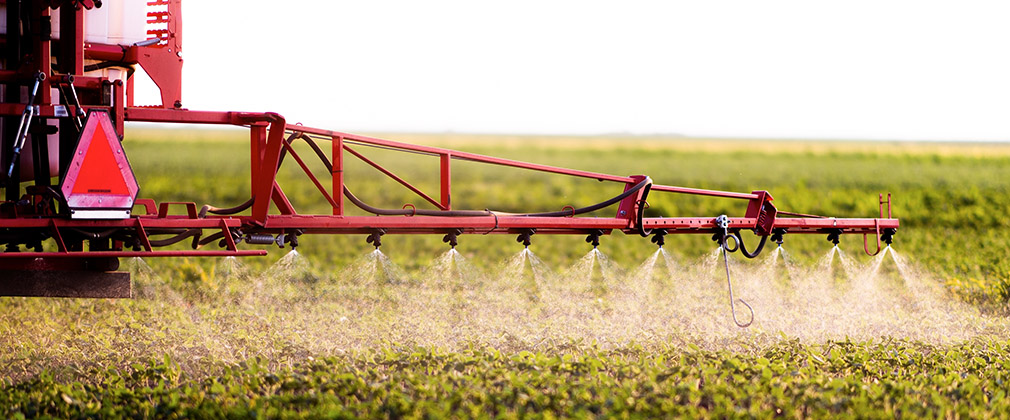
It’s a topic worthy of serious scrutiny. Every year, across vast swaths of the US landscape, farmers apply more than 250 million pounds of glyphosate, Roundup’s active ingredient, on crops; and upwards of 20 million pounds are used for landscaping purposes. It also turns up in our bodies. As of 2013-2014, 81 percent of Americans have had a recent exposure to glyphosate, as indicated by measurement of the chemical in their urine, according to the latest available data from the National Health and Nutrition Examination Survey. For kids aged six to 11, the detection rate was 87 percent. A 2023 randomized crossover trial—one of the strongest study designs possible—found a decrease in urinary glyphosate with consumption of an organic (non-pesticide) diet, suggesting that glyphosate traces make it into our food. But the drops were greatest among those living farther from sprayed fields—meaning that people who live near its application are also exposed.
Grunwald concludes that Roundup is “safe when used as directed,” and that to suggest otherwise is to be swayed by “politics, vibes and hysteria.” Given the chemical’s ubiquity, it’s a comforting message. Grunwald’s analysis, though forcefully argued, rests on a thin and incomplete reckoning with the science. What follows are a few points we hope he considers in future columns on the topic.
For one, Grunwald rebukes the World Health Organization’s International Agency for Research on Cancer (IARC), which in 2015 listed glyphosate as “probably carcinogenic.” His main critique: that the agency “also classifies red meat and working as a barber as probably carcinogenic.” Monsanto, the company that invented glyphosate and made billions of dollars over decades selling it, now subsumed by the German conglomerate Bayer, made the same argument, citing the same examples, when IARC came out with its conclusion in 2015. But in reality, IARC monographs have long been recognized within the scientific community for their rigor. And there’s nothing ridiculous about its conclusions on either working as a hairdresser or over-consuming red and processed meat.
Grunwald also states that the IARC “relied on studies that exposed rodents to preposterously huge doses” for its conclusion about glyphosate, quoting an interview with Robert Tarone, a long-retired National Cancer Institute statistician. (Grunwald doesn’t note that Tarone worked as a consultant to Monsanto about “various general aspects of the IARC Monograph Program” in 2015, when the company was publicly attacking the agency for its assessment.) But this charge reflects a misunderstanding of how toxicology research works. Due to economic and ethical considerations, scientists commonly use heightened doses in animal studies, as the EPA’s cancer guidelines clearly state. The goal is to test whether a compound causes cancer while using as few animals as possible. From those results, scientists then extrapolate exposure thresholds for people. This approach has been the gold standard for many decades. To imply that IARC singled out glyphosate for derision by highlighting rigged studies is misguided.
Grunwald errs again when he claims that glyphosate can’t harm humans because “it inhibits an enzyme that’s vital for plants but nonexistent in animals, so it can kill weeds without harming anything else.” It’s true that glyphosate works by snarling up a biological process known as the shikimate pathway, which is relied on by plants to synthesize protein, but not by animals. But the claim that it can’t damage “anything else” is incorrect. Many bacteria and fungi are shikimate-dependent, including important ones in both the human and soil microbiome. Multiple studies have found negative impacts on the microbial communities necessary to maintain healthy, productive soil. Meanwhile, a growing body of evidence highlights the link between human health and the trillions of microbes that live inside of us.
Glyphosate’s antimicrobial quality thus raises an important question: If the chemical can harm our resident microbes, can it also harm us? A 2023 paper by University of Iowa researchers found that mice exposed to glyphosate at levels equivalent to the EPA’s Acceptable Daily Intake underwent a significant shift in the population of their gut microbiota in ways known to induce inflammation, a precursor to many diseases, including cancer. While this research doesn’t prove that glyphosate harms humans at low doses, it certainly makes a plea for further study. And it undermines Grunwald’s claim that glyphosate can harm only plants.
Grunwald doesn’t quote any scientists in his piece besides Tarone; but for future pieces, we urge him to interview cancer researchers who study glyphosate. Several worrisome papers have emerged in the decade since IARC’s finding. A 2022 systematic review of past research found “unequivocal” evidence that exposure to glyphosate adversely affects the structure and function of the nervous system in humans and some animals. In a 2023 assessment, University of California, Berkeley, researchers found the chemical has several of the “key characteristics” of a carcinogen; and a similar 2021 study came to the same conclusion about glyphosate as an endocrine disruptor, meaning it can potentially mimic hormones and can cause disease at extremely low doses.
Another crucial topic unmentioned in his Times column—but ripe for future exploration—is the risks incurred by people who routinely come into contact with glyphosate. That group includes people who apply the herbicide on the job: farm workers and also hundreds of thousands of landscapers and groundskeepers. A 2019 meta-analysis of human studies found a “compelling link” between glyphosate-based herbicides and non-Hodgkin’s lymphoma. The study encompasses results from the NIH’s Agricultural Health Study (AHS), a decades-long project tracking health outcomes of pesticide applicators and their spouses in Iowa and North Carolina. Earlier analyses of AHS data tended not to show links between glyphosate and cancer, which the agrichemical industry seized on to exonerate Roundup. But cancers develop slowly, often lagging exposure by years, and it could be that trouble is only now starting to show up. Since that worrying 2019 result, the case for taking occupational health seriously has gained force. In a 2023 study, also based on Agricultural Health Study data, scientists at the National Cancer Institute found that male participants with the highest exposure to glyphosate showed heightened mosaic loss of chromosome Y (mLOY)—a condition linked with age-related diseases like Alzheimer's, cardiovascular disease, and certain cancers. Then there are people who live within or near glyphosate-soaked landscapes—in agriculture-heavy rural areas, near golf courses, along power lines, etc. In a 2015 geospatial analysis of USGS pesticide data, Environmental Working Group counted 11,660 churches and 3,247 elementary schools within 1,000 feet of a corn or soybean field.
We also encourage Grunwald to broaden his view of potential alternatives to widespread glyphosate use. “Really, the most pressing glyphosate danger is that it could be replaced by much nastier chemicals,” he declares. But soon after farmers began adopting corn, soybean, and cotton varieties genetically engineered to withstand Roundup in the mid-1990s, weeds began to evolve to withstand it. As Roundup resistance rocketed through the corn belt and cotton country, farmers responded not only by upping their dosage of glyphosate, but also by supplementing it with older herbicides that are indeed likely “much nastier.” Dicamba use, for example, spiked by a factor of nearly 10 between 2006 and 2019, while 2,4-D use has nearly doubled, even as glyphosate use held steady, according to the latest available government data. Dicamba and 2,4-D likely remain on an upward ascent, because the seed/agrichemical industry is now hotly marketing soybean and cotton varieties engineered to resist various combinations of Roundup, 2,4-D, dicamba, and other herbicides.
In other words, our regulatory system has done exactly as Grunwald urges and embraced glyphosate—and yet more-toxic chemicals are still raining down on farm country at increasing rates. Farmers are locked into what ecologists call a “pesticide treadmill,” fighting a losing battle with weed resistance. There are other, less chemical-intensive ways to grow plenty of food. Since 2001, researchers at Iowa State University have been using a farm located outside of Ames to compare the state’s conventional corn-soybean rotation with ones that incorporate more crops. So far, the project has resulted in more than two dozen peer-reviewed papers. The group sectioned the farm into three plots: one with a conventional corn-soybean rotation; one that added a small grain like oats sewn with red clover every third year; and one that added a fourth crop, alfalfa, to the rotation. Among many other benefits, the results show, farmers can slash their herbicide use dramatically—while maintaining and even boosting overall crop yield, simply by diversifying away from a reliance on just two crops. In other words, reducing reliance on glyphosate does not mean a tortured choice between accepting more-toxic herbicides or less crop production, as Grunwald insists.
So, is glyphosate as currently used a significant public health risk? For workers and others who come into contact with it, abundant evidence for concern has emerged in recent years. For consumers exposed to glyphosate residues in food, the case is less clear; but it’s not crazy at all to demand more scrutiny and caution from regulators. And there’s nothing irrational in seeking alternatives to an agriculture system so steeped in toxic chemicals. Despite the concerns of its Make America Healthy Again (MAHA) followers, the Trump administration is moving in the opposite direction—it has shut down the EPA office charged with assessing the toxicity of pesticides and loosened restrictions on spraying dicamba, despite its well-established propensity to drift far from targeted fields. And in December, the Department of Justice filed an amicus brief with the Supreme Court supporting Bayer’s effort to overturn previous court decisions awarding damages to people who claimed glyphosate caused their cancer.
That same month, Grunwald’s case for not worrying about Roundup took a heavy blow. The academic journal Regulatory Toxicology and Pharmacology retracted a research review published in 2000, which concluded that glyphosate use posed no human health risks. Authored by three ostensibly independent researchers, the paper had emerged as one of the most-cited academic studies on the topic, and a cornerstone for government approvals of the chemical across the globe, including the United States. A scandal around the paper erupted in 2017, when documents uncovered in a cancer lawsuit revealed a 2000 email from a Monsanto executive praising colleagues for “their hard work over three years of data collection, writing, review and relationship building with the papers’ authors.” In its retraction, the journal cited not only the undisclosed depth of Monsanto’s involvement, but also a trove of research suggesting carcinogenicity that the authors neglected to consider.
Given the regulatory retreat in Washington and the dubious claims that swirl within the Trump-aligned MAHA movement, the US public could certainly benefit from fact-based commentary on the public health consequences of our way of growing food. Grunwald is making a game effort to deliver on that front. We applaud his support for ramping up regulation of factory-scale livestock farms. But, as in the case of Roundup, his zealous support of industrial agriculture often clouds his view. In such cases, we worry that his work dissuades consumers from asking hard questions about how we’re being fed; discourages farmers from innovating less-damaging ways to grow food; blesses the business practices of big agrichemical firms; and comforts regulators for ignoring real health risks embedded in our food system.
Sara Lupolt is the science and translation director at the Johns Hopkins Center for a Livable Future and an Assistant Scientist in the Department of Environmental Health & Engineering at Johns Hopkins University. Patti Truant Anderson is the policy director at CLF and an Assistant Practice Professor in the Department of Environmental Health and Engineering. Keeve Nachman is the Robert S. Lawrence Professor in the Department of Environmental Health & Engineering and associate director of CLF; and Tom Philpott is a Senior Research Associate at CLF.
The views of the authors do not necessarily reflect those of the Johns Hopkins Center for a Livable Future or the Johns Hopkins University.