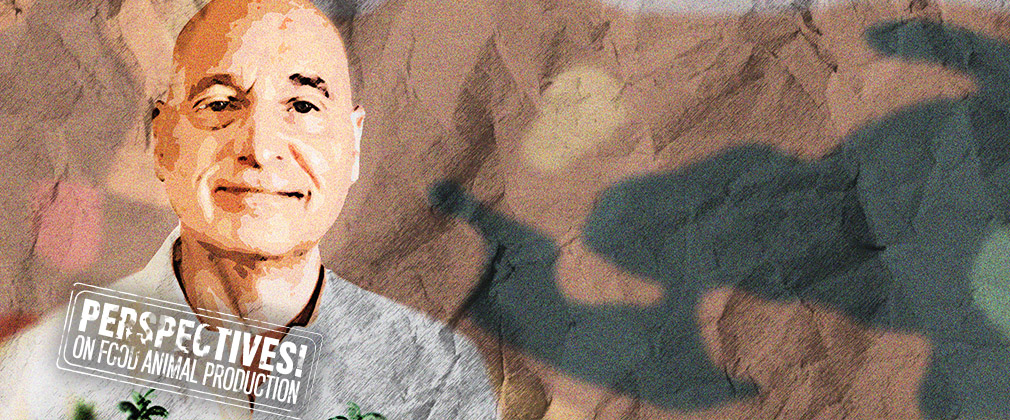
Attorney and Scientist Paul Locke: Can We Respect Animals?
Trigger warning: some links contain images of animal neglect.
In 1965, Sports Illustrated featured an article about Pepper, a Dalmatian that was stolen and sold to a research facility that eventually euthanized her. The next year, TIME magazine ran a story, “Concentration Camp for Dogs,” which showed graphic images of animals at dog dealer facilities, also known as “puppy mills.” For a period, members of Congress received more angry letters about the treatment of animals than they did about either Civil Rights or the Vietnam War. In 1966, Congress passed and President Lyndon Johnson signed the Animal Welfare Act (AWA), despite a tooth-and-nail fight against it by breeders and especially by scientists.
The AWA was the first federal legislation to regulate animal treatment in research and was intended originally to address pet theft. Over time, it expanded to include more animals, although its coverage does not include those animals used most frequently in research, such as rodents.
Today, our human relationships with animals run the gamut, from doting to cruel. The same person who thinks nothing of spending thousands of dollars on the comfort and well-being of a beloved pet also thinks nothing of purchasing meat harvested from an animal that has been uncomfortable, and perhaps suffered, the entirety of its short life. In between those extremes are the animals we “use”—an unpleasant term—in a wide range of capacities. Some animals perform as service animals, perhaps assisting the blind or detecting seizures before they happen; some are police animals, possibly sniffing for bombs in airports; some are used for emotional support; some entertain us at zoos and aquariums; some are raised for research in laboratories.
In 1975, philosopher Peter Singer, author of Animal Liberation, popularized the term “speciesism.” The book challenges us to consider why we treat some species so well, while we treat others so cruelly. This was, perhaps, the moment when people became aware of, or began to think about, farm animals. In 1985, another prominent philosopher, Bernard Rollin, helped to pass an animal welfare amendment that granted some protections for laboratory animals. One of his books, Farm Animal Welfare, brought attention to the plight of livestock raised in factory farms. Another one of his books, Animal Rights and Human Morality, pushed for an understanding of a sort of dignity for animals, insisting that animals should be able to express their innate nature, which he called telos.
Professor Paul Locke, DrPH, JD, MPH, an environmental scientist and attorney in the Department of Environmental Health and Engineering in the Bloomberg School of Public Health, co-teaches a law school class called The Law and Ethics of Animal Testing. Other classes taught by him cover environmental and occupational health law, as well as toxicology, physiology, and molecular mechanisms. He tells his students that are three lenses we can use to look at animal law: rights, obligations, and sentience or cognition.
“Animal rights, that’s an easy discussion,” Locke says. “In the U.S. legal system, animals have no rights.”
Simply put, by law, animals are property. Protections aimed at animals in laboratory systems focus on keeping animals healthy as a way of making data useful and maximizing that usefulness, says Locke. There are some laws about how many animals can be used in that setting, and about veterinary care, enrichment and housing.
In the food system, there are even fewer protections. As property, farm animals must be transported in a certain way. “But they are not protected as creatures,” says Locke. The laws that do exist around farm animals exist in order to protect human health.
“In terms of obligations, we are failing as a society,” says Locke. “We don’t spend enough time thinking about the obligations we as humans owe other animals.”
He cites the Old Testament, which asserts that humans have dominion over all animals. Genesis 1:26 states, “Then God said, ‘Let us make humans in our image, according to our likeness, and let them have dominion over the fish of the sea and over the birds of the air and over the cattle and over all the wild animals of the earth and over every creeping thing that creeps upon the earth’” (New Revised Standard Version).
“But the Bible also says humans have obligation to treat Earth a certain way,” he says. In Genesis, Noah is commanded to “Be fruitful and multiply, and fill the earth. And the fear of you and the dread of you shall be on every beast of the earth, on every bird of the air, on all that move on the earth, and on all the fish of the sea. They are given into your hand.” In other words, those who follow the Old Testament are commanded to work and take care of the Earth. In Proverbs, followers are told to take righteous care of the needs of their animals.
There hasn’t been much progress since Singer and Rollin, Locke says, pointing out that Singer’s 1975 Animal Liberation was updated in 2023, and not much in the book changed.
As for the third lens—defined as sentience, cognition, or agency—Locke says there are tens of thousands of studies showing that a wide range of species are sentient and capable of cognition.
“Animals have cognitive powers,” he says. “We have not factored that very much into our animal law system.”
So, what drives the laboratory animal law system? Locke says that science is the biggest driver, with a focus on “good health” for lab animals. Pain and distress are central themes in the protection of lab animals, although neither term is defined.
“It’s the responsibility of the researcher and institution to make sure the animals are not in pain,” says Locke, “except in the cases where you’re specifically studying pain.”
Pets and service animals are also granted protections, with anti-cruelty laws dating back to the 18th century. But for livestock, there is essentially nothing in the way of protection or rights.
“In terms of agriculture, there is discussion and concern,” says Locke. “The animal-based industrial consortium is very powerful.”
He advocates that we think about this problem through the lens of One Health, a system of thought that recognizes that people, animals, plants, and other ecosystems are connected and dependent on each other. One Health aims to understand the connection between the health of our ecosystems, animals, and human communities. Locke rejects the notion that animal health and human health are “totally different.” They’re distinct, he says, but they’re connected.
“It’s important to recognize that animals are non-humans that live with humans, and we all have a stake in universal health,” he says. “Earth has to support all of this. Right now, sustainability should be a major question.”
He flags industrial agriculture as a glaring problem with sustainability. “Can we have a livable future if we keep going down the ag road we’re on?”
There’s no shortage of science on the issue of animal welfare, he says. We don’t need more science to know what to do—we can support meaningful change now.
“We have enough science, and it’s not being incorporated proactively,” he says. “It’s a cognitive dissonance problem, not a data problem. It’s been like that for years, and I don’t know what we can do to break that.”
But sometimes support comes from unexpected places. In his own lab, Locke is developing policies that support the use of new approach methodologies for testing that replace animal models with artificial intelligence, organoids, organs on a chip, and more—and President Trump and his NIH have created a high-level office to support new approach methodologies. The Office of Research Innovation, Validation, and Application (ORIVA) spearheads a federal mandate to prioritize human-based technologies and reduce reliance on animal testing.
“The administration is very focused on new methodologies. A lot of what [the president] talks about is innovation, putting new things on the market. We’re clapping, but cautious.”
Beyond the fickleness of political institutions, Locke’s holding out hope that people will recognize all the ways we interact with animals and that their lives, as creatures, should be respected.
“It’s not going to be a one-size-fits-all situation,” he says. “But it makes sense to start with and change the industrial agriculture system. We shouldn’t focus exclusively on that, but it’s a good place to start.”
For more insights and opinions, check out CLF Perspectives on Food Animal Production.
Image: Mike Milli, 2026.