Fishing Safety First
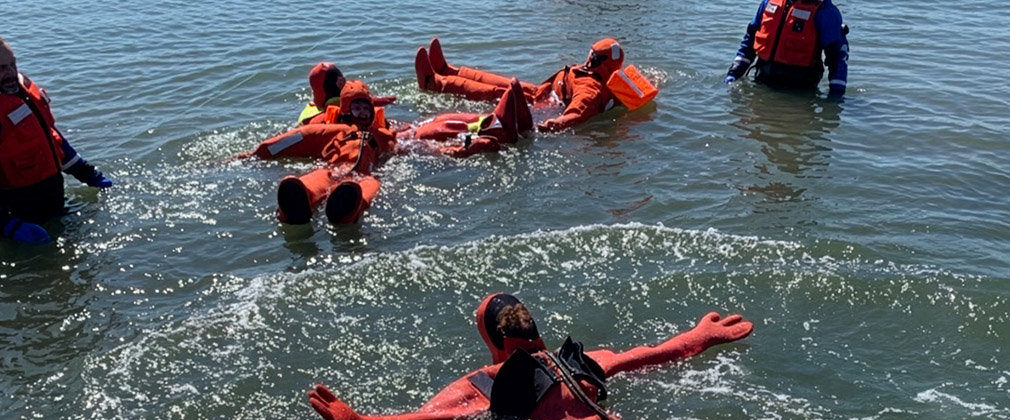
CLF’s Allie Wainer and Dave Love attended a two-day training in Hampton, Virginia, to learn about fishing safety. The training was hosted by Fishing Partnership Support Services (FPSS). They learned how to put out fires, plug leaks in vessels, make mayday calls, set off flares, and survive in cold water. This course helped our team understand the risks that commercial fish harvesters face every day when working on the water.
“It was great to see this FPSS course focus on just how crucial wearing a personal flotation device (PFD) is for staying alive in the case of going overboard on a fishing vessel, since many fishermen do not regularly wear one,” says Wainer. “The instructors emphasized that wearing a PFD extends your survival in cold water from 10 minutes (at most) to about one hour, crucial time for the crew to bring you back on board.”
“I am so thankful for the FPSS hosting free drill conductor trainings and giving out free life jackets to fishermen,” says Love. “These events save lives. I enjoyed meeting the many fishermen who attended and have a growing respect for the risks they take every day while commercial fishing.”