Disruption in Minnesota




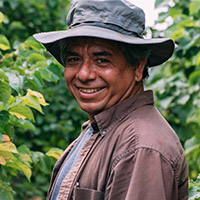
Episode 29 of Unconfined, in which poultry rancher Reginaldo Haslett-Marroquin reflects on the intersection of the food system and federal immigration enforcement.

The surge’s psychic toll
By Christine Grillo Subscribe to Host Notes
Two years ago, we aired an episode in which we talked with guest Reginaldo Haslett-Marroquin about his Tree Range Farms in Northfield, Minnesota, an alternative poultry ecosystem where farmers graze chickens under trees. (Check out Episode 9, “Chicken Heaven.”) This spring, we talked again with Regi, but about something decidedly less cheerful than chickens. As immigration enforcement agents leave a trail of tears in Minnesota, we wanted to find out how he and his colleagues are doing and hear some of his thoughts on how Operation Metro Surge is affecting his state, his town, and his regenerative agriculture enterprise.
Regi was born and raised in Guatemala during its long civil war (1960-1996), during which time US military and financial support propped up an authoritarian government. He immigrated to the United States as a young man and is a legal US citizen. In addition to being a farmer, Regi is an author and the founder and director of Innovation and Strategy at the Regenerative Agriculture Alliance, where he also leads the systems and infrastructure development for Tree Range Farms.
A few months ago, in December of 2025, the federal government unleashed an immigration enforcement surge in Minnesota and quickly escalated it, harassing, intimidating, and detaining not only undocumented immigrants, but lawful citizens, legal residents, asylum seekers, and citizens trying to protect their neighborhoods. As a child in Guatemala, Regi developed coping mechanisms for dealing with what he describes as “unhinged paramilitaries,” but when he left Guatemala for the US, he “left that toolkit at the bottom of the lake,” he says. Now, despite his status as a US citizen, he now walks around with a pit in his stomach. He says that “being brown makes me a target right now.” Sleeping is hard, eating is hard, his blood pressure remains high, and he goes through his days with a sense of dread.
He reports that Tree Range Farms is doing all right. Northfield is rural and so far has not been targeted by the agents. Also, the surge happened in the winter, when the farm was closed. The farm is bursting with life now, in late March, which brings some sense of renewal. But the psychic and spiritual toll is heavy. “How are you supposed to heal?” he asks. “This is a multigenerational wound.”
He and his colleagues also have to manage uncertainty. Tree Range is delivering chickens, as is the usual timing for this season, but it’s difficult to make plans when you have no idea what the future holds. “We don’t violate any laws,” says Regi, but that’s no guarantee against being targeted.
“I think the disruption in the food system is happening on a larger scale,” he says. He knows of processing facilities in Illinois and Nebraska that were targeted back in September of 2025.
“If you are an immigration officer, you want to go to those large meat packing facilities because the meatpacking industry has relied on hiring undocumented laborers in order to keep food prices ‘cheap.’ It's produced on the backs of undocumented immigrants who they pay little or nothing some days, because there's also the whole phenomena of wage theft,” he says.
The key to facing disruption and unpredictability, he says, is resilience. That’s true for climate change, and that was what helped them to bear out disruptions from the Covid-19 pandemic.
“And it just happens that the next disruption that came up was caused by the federal government … not a foreign enemy,” says Regi.
We were able to wrap up the conversation on a somewhat positive note. Regi believes that we’ll get through this terrible moment in time. Now, and moving forward, the mission remains the same: rely on nature, think locally, prioritize resilience, strive for sovereignty. That’s true not only for food systems, but perhaps for every system we want to be a part of.
In Host Notes, the voices behind Unconfined podcast deliver additional context to supplement our interviews. Their views do not necessarily reflect those of the Johns Hopkins Center for a Livable Future or the Johns Hopkins University.