Who Do Americans Trust for Nutrition Advice?
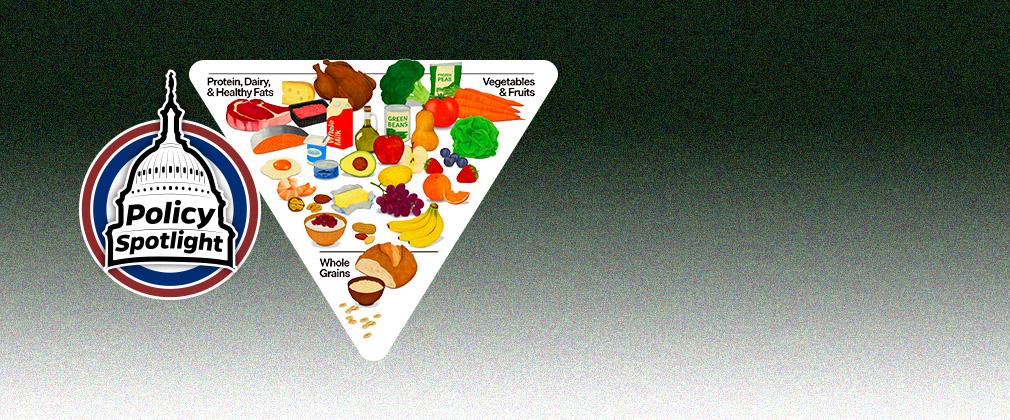
When I sat down to write about the newly released Dietary Guidelines for Americans, I couldn’t help but think about the parallels to many other health-related issues in the news. The common thread I keep thinking about is trust. Who we trust—or distrust—is a hugely important filter for how we interpret information.
In a functional system, we rely on leaders and institutions to share valid information, based on evidence. We simply cannot expect all Americans to “do their own research” in any meaningful way to assess critical topics ranging from the safety of ingredients in our food to the structural integrity of the bridge we drive across. Thus, we must determine who we trust for the information we need to guide us in the countless decisions we make each day.
On the face of it, many (including we at CLF) had some positive things to say about the new Dietary Guidelines for Americans. For example, emphasizing whole foods and encouraging fewer highly processed foods are reasonable suggestions that largely echo earlier versions of the guidelines and are consistent with the scientific evidence.
But what hasn’t received sufficient attention, in my opinion, is how the Department of Agriculture (USDA) and the Department of Health and Human Services (HHS) largely dismissed the scientific report from the independent Dietary Guidelines Advisory Committee (DGAC). The DGAC review was a rigorous and transparent process that assessed the state of the evidence on nutrition science. Yet, the federal agencies rejected more than half of DGAC’s recommendations, claiming that the committee’s nod to health equity made its findings illegitimate.
To justify their endorsement of meat and full-fat dairy, federal officials replaced the DGAC with a seemingly rushed, opaque report produced by an entirely new committee. This new scientific committee—whose existence we learned about only once the guidelines were released—included a number of people with financial ties to the meat and dairy industries. A number of experts have raised concerns about both the lack of transparency with how the guidelines were developed and the ways in which they deviate from the body of scientific evidence (for example in this JAMA Viewpoint).
All of this while HHS and USDA are touting their use of “gold standard science.”
When the process is so problematic, how can we place any trust in the recommendations?
This begs the question of how much the American public knows and cares about dietary guidelines to begin with. Historically, we know that the vast majority of Americans do not try to follow the guidelines. Who do they go to for nutrition information? Do they tend to trust the federal government to develop evidence-based nutrition recommendations?
These were questions we sought to answer in a survey of 1,000 Americans fielded in November 2025, ahead of the release of the guidelines. Here are some of our topline findings.
- About half of Americans say they trust their own doctor or healthcare provider the most when it comes to information on what is healthy to eat. Only 5% chose guidance from the government as their most trusted source of information.
- Most people (72%) say they had heard little or nothing at all about the Dietary Guidelines in the news in the prior year.
- A majority of Americans (71%) think that the food and agriculture industries influence the development of the Dietary Guidelines (including those who think the industries have “a lot of influence” or “a moderate amount of influence”).
We also asked a hypothetical question that ended up coming true once the guidelines were released. One of the rejected DGAC recommendations was to limit red and processed meat intake and increase consumption of beans, peas, and lentils. In our survey, we asked Americans if their trust in the Dietary Guidelines would change if this recommendation from the scientific committee was omitted from the final guidelines. We found that 45% of Americans said they would lose trust in this scenario, while only 15% said their trust would increase. The remainder said their trust would not change.
This finding, while just one data point, provides some indication that having a transparent and trustworthy process still matters to many people. That may not seem like much, but it does give me some hope as CLF advocates for transparency in all aspects of our food systems.